The True Cost of Homeownership in Mammoth Lakes: What to Expect Beyond the Mortgage
February 9, 2026
Mammoth Lakes Community
February 9, 2026
Mammoth Lakes Community
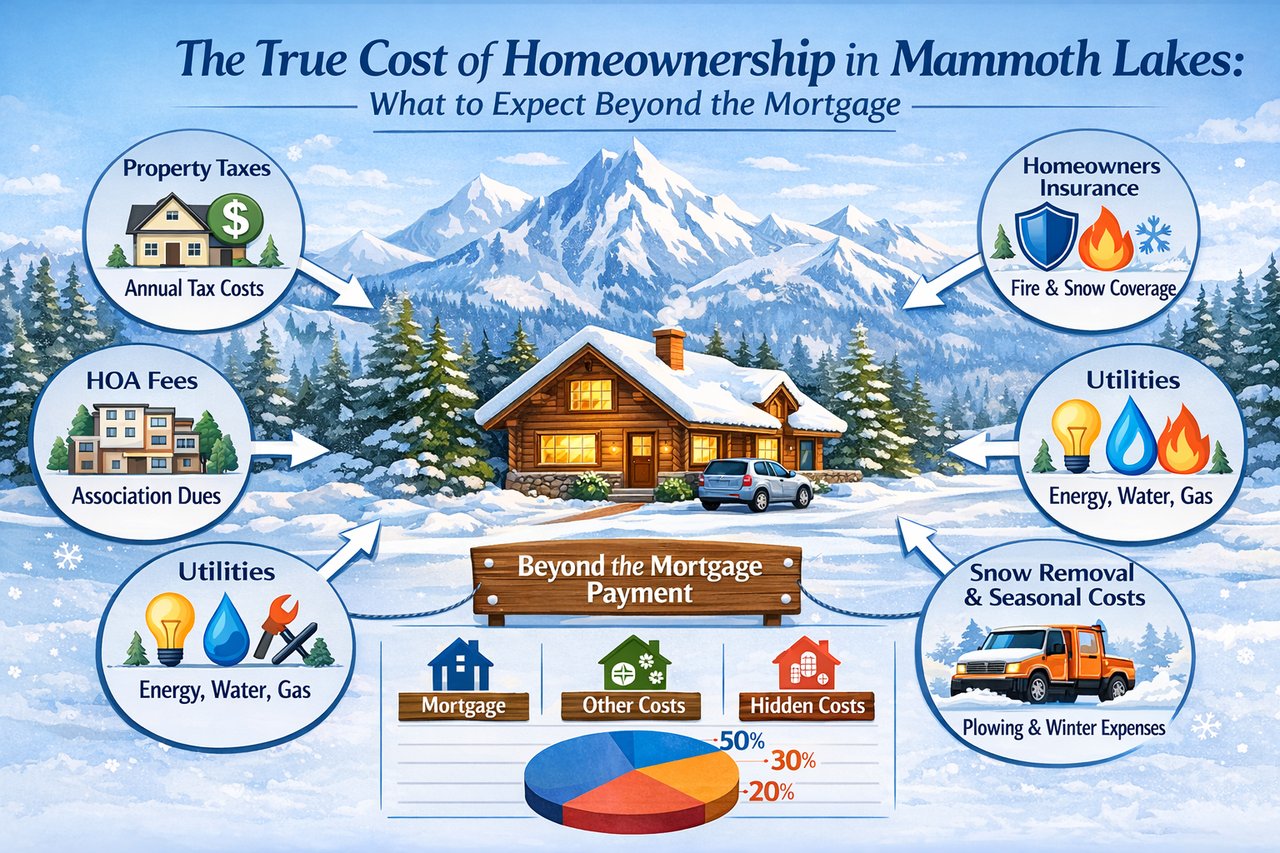
When buyers ask whether they can afford a home, the conversation usually centers on one number: the monthly mortgage payment. It’s the number lenders qualify, the number discussed during showings, and often the number buyers use to set their price range.
But in Mammoth Lakes, the mortgage is only part of the equation.
Nationally, homeowners spend an average of $21,400 per year on ownership costs beyond the mortgage—about $1,800 per month. When you layer those costs on top of a typical mortgage payment, total housing expenses can increase dramatically.
Qualifying for a loan answers one question: Can a lender approve this payment?
It doesn’t answer the more important one: Can you comfortably maintain ownership long term?
That distinction matters everywhere—but it matters especially in a mountain market like Mammoth Lakes, where climate, HOAs, insurance, and second-home dynamics play a significant role.
Property taxes tend to rise over time as home values increase. Even when tax rates remain stable, reassessments can lead to higher annual bills. While the actual property tax rate can vary by area, 1.12% is a good number to use for basic calculations.
Buyers should plan for gradual increases rather than assuming this cost will remain flat.
Insurance is one of the most misunderstood costs for Mammoth Lakes homeowners.
Mammoth Lakes is located in a Very High Fire Hazard Severity Zone, which directly impacts insurance availability, premiums, and deductibles. Fire risk—not snow—is the primary driver of insurance costs in this market.
Homeowners may experience:
Higher premiums
Larger deductibles
Fewer carrier options
Periodic re-shopping of policies
Insurance costs can rise even when nothing about the property changes, often resulting in unexpected escrow increases. Reviewing insurance options early in the buying process is critical.
HOA dues are a major factor for many Mammoth Lakes buyers.
A large percentage of local condos and townhomes are part of HOAs. While fees vary by complex and unit size, $800 per month is a realistic average HOA cost for many Mammoth Lakes condos.
HOA dues often cover:
Snow removal
Exterior maintenance
Roofs and siding
Trash service
Water
Shared insurance (exterior and common area)
While these services provide value, HOA dues rarely decrease and often increase over time. Special assessments—especially in older complexes—are also possible. Reviewing HOA financials and reserves is essential.
Utility costs in Mammoth Lakes are typically higher than buyers expect, particularly during winter.
Longer heating seasons and colder temperatures contribute to:
Higher energy usage
Seasonal fluctuations in monthly bills
Buyers relocating from milder climates should plan for increased winter utility costs. Summer utilities costs are significantly lower.
Every home requires ongoing maintenance, regardless of age.
Common expenses include:
HVAC servicing
Seasonal inspections
Minor repairs and upkeep
When averaged over the year, routine maintenance often adds $200–$400 per month to ownership costs—and can be higher for second homes.
Snow is a defining feature of Mammoth Lakes—and a recurring expense for single-family home owners.
Many homeowners budget for:
Driveway and walkway plowing
Roof snow removal
Ice dam prevention
Snow costs vary by season, but in heavier winters they can add up quickly and are not optional.
Cold temperatures introduce risks that don’t exist in warmer markets, including:
Frozen pipes
Cracked irrigation lines
Failed hose bibs
Preventative measures and regular winter checks help avoid expensive emergency repairs.
One advantage of owning in Mammoth Lakes is that rental income may help offset ownership costs, depending on the property type.
Most condominiums allow nightly rentals, offering short-term income potential
Most single-family homes allow rentals of 31 days or longer, supporting seasonal or long-term rentals
Rental income should not be used to justify affordability, but when managed conservatively, it can reduce the net cost of ownership.
Owners should also plan for:
Property management fees
Higher utilities
Increased maintenance
Compliance with local regulations and HOA rules
For many owners, the goal is balance—offsetting expenses while maintaining personal use.
Major repairs are part of long-term homeownership.
Typical replacement costs include:
HVAC systems: $5,000–$10,000
Roofs: $8,000–$15,000
Water heaters: $1,200–$2,500
Inspection reports should be used as planning tools. Aging systems signal future expenses—not surprises.
Even with a fixed-rate mortgage, ownership costs tend to rise.
Insurance, HOA dues, utilities, and maintenance often increase 3–5% annually. Planning for gradual increases helps prevent financial strain down the road.
Successful homeowners plan beyond the purchase.
Maintain a dedicated repair reserve
Avoid draining savings at closing
Prioritize preventative maintenance
Understand system timelines
Preparation protects both finances and enjoyment.
Affordability isn’t defined by lender approval—it’s defined by long-term comfort.
The most informed buyers evaluate affordability as mortgage plus total carrying costs, even if that narrows the price range slightly. The result is greater flexibility, fewer surprises, and a better ownership experience.
Owning a home in Mammoth Lakes can be incredibly rewarding when expectations are realistic and planning is proactive. Understanding the true cost of ownership isn’t limiting—it’s empowering.
Stay up to date on the latest real estate trends.
Buyer
September 30, 2026

Market Update
September 15, 2026

Buyer
September 14, 2026

September 11, 2026
Market Update
August 24, 2026
Sellers
August 11, 2026

Lifestyle
July 29, 2026

Buyers
July 23, 2026
Market Update
July 21, 2026
You’ve got questions and we can’t wait to answer them.